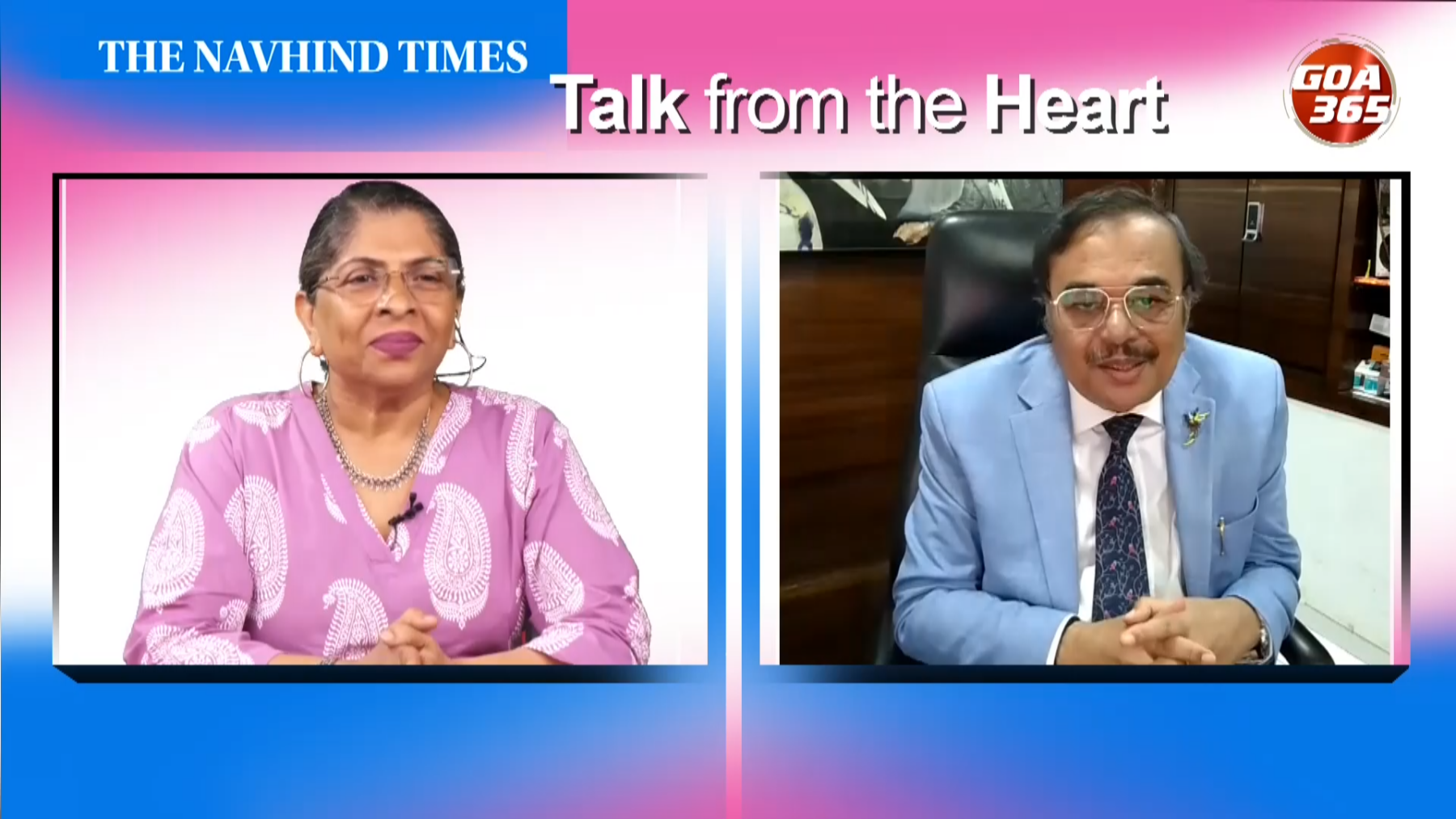

Cancer uncovered
Maria Fernandes/NT
Cancer remains one of the most urgent health challenges of our time. To offer deeper insight into the
disease and its many dimensions, surgical oncologist, Padma Shri Dr. Ramakant K Deshpande
appeared as a guest on the latest episode of the Navhind Times talk show ‘Talk from the Heart,’ which
aired on the Goa 365 channel. The conversation delivered a powerful and enlightening examination of
cancer, dispelling myths, outlining modern treatment approaches and accentuating the importance of
awareness and early detection.
Renowned for his pioneering work in thoracic oncology and his decades of service at leading
institutions such as Tata Memorial Hospital and the Asian Cancer Institute, Dr. Deshpande brought
exceptional expertise to the discussion. He emphasized that awareness and prevention remain the
first line of defense against cancer and reinforcing his message, he said, “Cancer is not a death
sentence; early detection and timely treatment save lives.”
On the subject of diagnosis, Dr. Deshpande noted that many cancers in India are identified at
advanced stages not because treatment options are lacking, but because individuals often delay
seeking medical attention. Social stigma, fear of a possible diagnosis, and limited access to screening
facilities all contribute to these delays. To counter this trend, he emphasized the need for stronger
community education, widespread routine screenings, and a more proactive approach to early
symptoms.
Turning to his field of expertise—surgical oncology—Dr. Deshpande highlighted how cancer surgery
has evolved through minimally invasive techniques such as thoracoscopic surgery. “These methods
offer patients safer procedures, shorter hospital stays, and quicker recovery times. Such advances are
especially crucial for lung and chest cancers,” he explained.
Besides the technical aspect of the disease, the human dimension of cancer care was also discussed at
length. With the thousands of patients he has interacted with, Dr. Deshpande spoke passionately
about the emotional and psychological toll of diagnosis, not only for patients but also for families.
“Compassion and clinical expertise are both required to confront this condition. Good care involves
open communication, reassurance and involving patients in decisions about their treatment is crucial,”
he said.
Looking ahead at the future of cancer treatment, Dr. Deshpande acknowledged that therapies like
immunotherapy and precision medicine are promising but was realistic about the extent of these
treatments. “They work best in specific cases and must be integrated within a multidisciplinary
treatment approach. Surgery, chemotherapy, radiation and emerging therapies are not competing
tools but complementary ones,” he emphasized.
His final message was that with awareness, early detection and modern treatment, cancer outcomes
can improve dramatically. “We have to confront cancer with knowledge rather than fear,” he said,
“But above all prevention is key.”